How to Keep Chicken Water from Freezing Without Electricity: 6 Hacks
Quick answer
To keep chicken water from freezing without electricity, use passive thermal insulation and natural water movement. The most effective off-grid methods include floating saltwater-filled plastic bottles in the drinker, placing black rubber tubs inside an insulated tire filled with straw, and setting waterers in direct southern sunlight. Salt water stays liquid below 32 degrees Fahrenheit, transferring gentle motion to surface water. For sub-zero conditions, rotate two rubber pans on a twice-daily morning and evening schedule, bringing the frozen pan indoors to thaw naturally.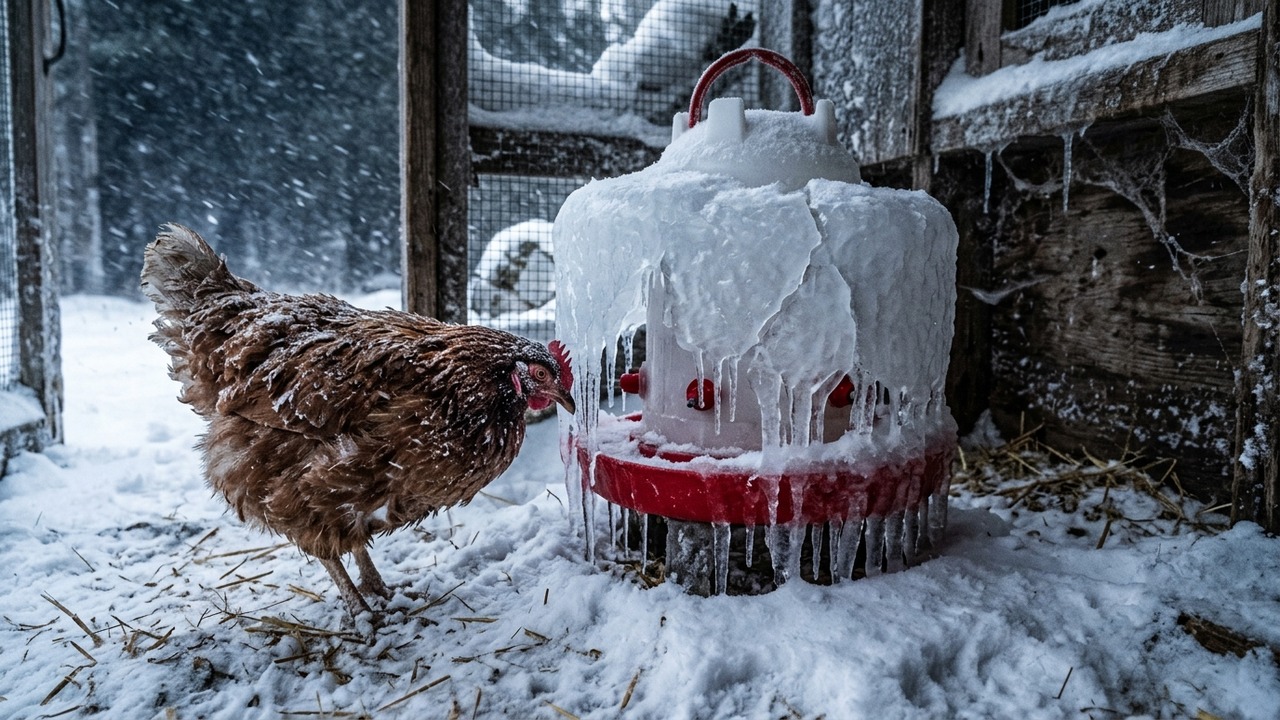
Quick facts
| Daily Water Requirement | Adult chickens drink 1 to 2 cups (roughly 0.5 liters) of water daily even in winter |
|---|---|
| Top Non-Electric Solution | Floating a sealed saltwater bottle or ping pong balls to break surface ice tension |
| Best Drinker Material | Heavy black rubber livestock pans (can be inverted to pop ice blocks without cracking) |
| Critical Health Warning | Never add salt, glycerin, or alcohol to the chickens’ drinking water supply |
1. Why winter water access is essential for flock survival
According to Utah State University Extension poultry research, chickens consume twice as much water as food by weight. When winter temperatures drop, a chicken’s digestive system relies heavily on continuous hydration to process dry grains and whole seeds. If drinking water freezes into a solid block for more than six to eight hours, several health crises occur:
- Crop impaction: Without water to lubricate fibrous feed, dense mash and grains form a cement-like plug in the crop that requires emergency intervention.
- Immediate cessation of egg laying: An egg is roughly 75% water. Hens will stop laying within 24 hours of losing free-choice water.
- Hypothermia: Digestion produces the internal metabolic heat that keeps birds warm overnight. Dehydrated chickens cannot digest food efficiently, causing body temperatures to drop.
- Snow eating risk: Chickens will peck at snow if deprived of water, but melting snow inside the digestive tract drains valuable body heat and accelerates hypothermia.
2. Six proven off-grid freeze prevention hacks
When running electrical extension cords to the coop is impossible or unsafe, use these field-tested passive methods:
| Method | Lowest Temp (°F) | Setup Cost | Daily Maintenance Required |
|---|---|---|---|
| Floating Saltwater Bottle | 25°F (-4°C) | Under $2 | None (gentle breeze keeps bottle bobbing) |
| Insulated Tire Solar Sink | 15°F (-9°C) | Free (recycled materials) | Place in direct southern winter sunlight |
| Table Tennis (Ping Pong) Balls | 28°F (-2°C) | Under $5 | Wipe clean weekly |
| Deep Litter Floor Heat Sink | 20°F (-7°C) | Low | Rest pan directly on active warm litter |
| Large Volume Drinker (5+ Gallons) | 22°F (-6°C) | Standard | Top up weekly |
| Two-Pan Rubber Rotation System | Below 0°F (-18°C) | $15 for 2 pans | Swap pans twice daily (morning & night) |
Method 1: The submerged saltwater thermal bottle
Fill a clean 16-ounce plastic soda bottle halfway with water, add 1/3 cup of standard table salt, and fill with warm water. Seal the cap tightly. Place this sealed saltwater bottle into your flock’s open water pan. Because salt water has a much lower freezing point than fresh water, the liquid inside the bottle stays fluid down to 10 degrees Fahrenheit. As winter breezes blow across the drinker, the bottle bobs and ripples the surface, preventing ice crystals from bridging across the pan.
Method 2: The recycled tire solar heat sink
Find an old vehicle tire and wash it thoroughly. Paint the outside matte black if faded. Pack the bottom interior cavity with straw or dry wood shavings to create thermal ground insulation. Place a wide 3-gallon black rubber livestock pan inside the tire center. Position the assembly in the south-facing corner of the chicken run where it catches maximum winter sun. The black rubber and tire absorb solar infrared rays, heating the water throughout midday hours.
Method 3: The durable two-pan rotation
For sustained sub-zero blizzards, no passive trick stops water from eventually freezing solid. The simplest stress-free solution is investing in two heavy-duty rubber feed bowls (such as Fortex or Miller pans). Fill Pan A with warm water in the morning. When it freezes into a solid puck by late afternoon, bring Pan B full of fresh warm water to the coop. Invert Pan A, step firmly on the flexible rubber base, and the solid ice cake pops out cleanly without cracking the bowl.
Frequently Asked Questions
Can I add a little salt or apple cider vinegar to chicken water to stop freezing?
Never add salt to your chickens’ drinking water. Chickens have very sensitive kidneys and cannot excrete excess sodium; drinking saline water causes acute salt toxicity and kidney failure. Apple cider vinegar (one tablespoon per gallon) offers mild digestive benefits, but it does not meaningfully lower the freezing point of water.
Why do plastic and galvanized chicken fonts break in winter?
Water expands by roughly nine percent as it turns to ice. Rigid materials like galvanized tin and brittle moulded plastic have zero flexibility. When water freezes inside the seams or base rings, it tears the solder joints and cracks the plastic basins. Heavy flexible rubber pans flex with expanding ice and last for decades.
How often should I change chicken water in freezing temperatures?
Provide fresh, warm water at least twice daily: first thing at sunrise when birds leave the roost dehydrated after a long winter night, and again two hours before dusk so they can fill their crops before roosting.
Sources and further reading
- Purdue University Extension: Winter Management of Backyard Poultry Drinkers.
- USDA APHIS: Defend the Flock: Winter Biosecurity and Water Safety.
- Flockline Learn: Frozen Chicken Water Prevention Hacks.