Sweeter Heater vs Radiant Panel: Coop Heater Safety & Placement
Quick answer
In evaluating the Sweeter Heater vs radiant panel coop safety, both provide zero-fire-risk infrared heat, but their physical mounting positions serve different coop layouts. The Sweeter Heater suspends horizontally from the ceiling directly above roosting bars, directing gentle downward radiant warmth onto sleeping birds like a natural mother hen. Wall-mounted radiant panels attach vertically to coop framing, warming standing birds on one side. Both draw only 150 to 200 watts and stay safe to the touch, making either option dramatically safer than glass heat lamps.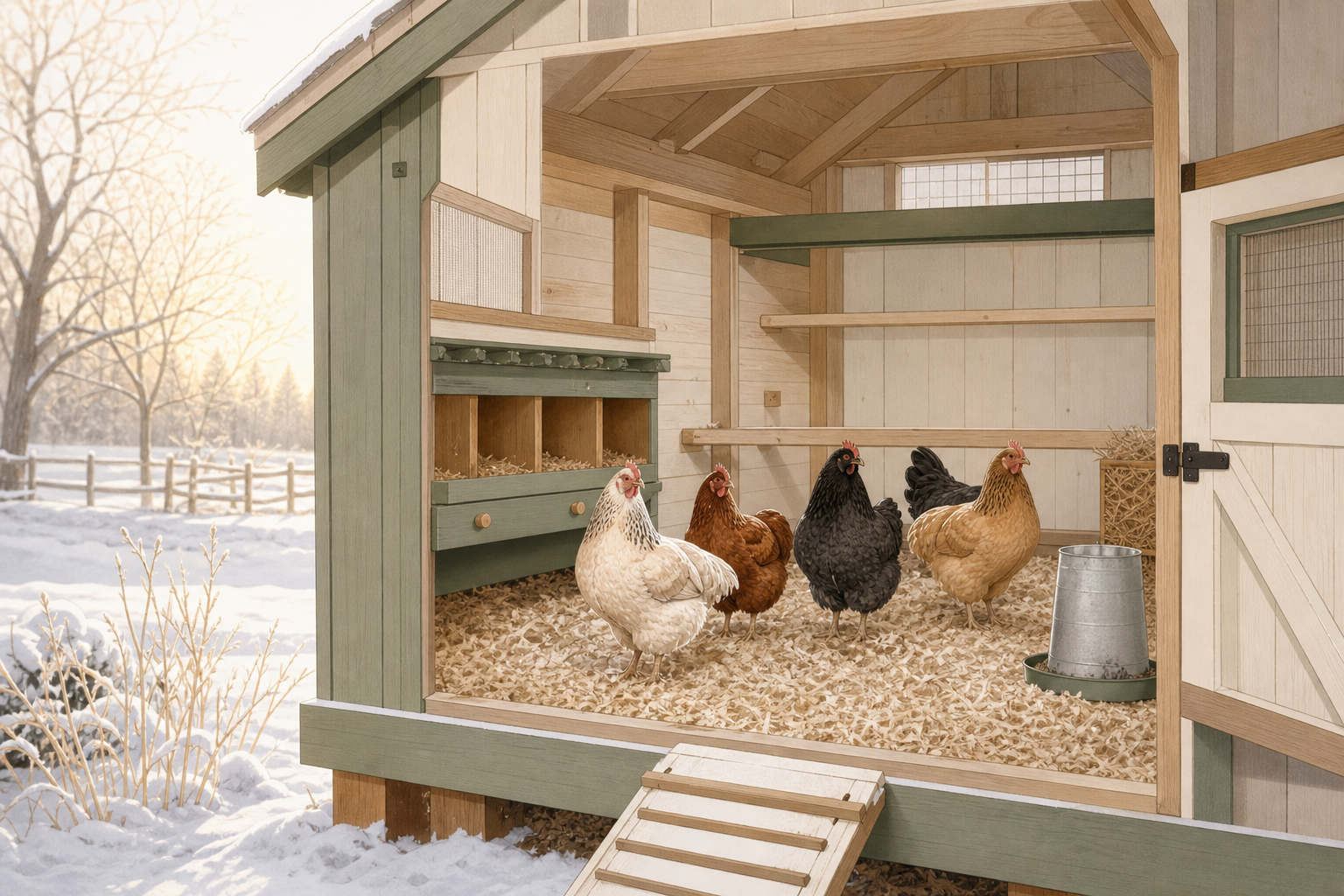
Quick facts
| Sweeter Heater Mount | Horizontal ceiling suspension directing uniform far-infrared heat downward |
|---|---|
| Radiant Panel Mount | Vertical wall bracket or floor stand warming one lateral side of the bird |
| Power Consumption | Both pull approximately 150 to 200 watts (slashes electric cost by 40% vs lamps) |
| Hermetic Enclosure | Sweeter Heater features fully sealed, moisture-proof commercial fiberglass casing |
1. Overhead suspension vs lateral wall heating
When selecting safe supplemental heat for sub-zero climates, physical geometry dictates bird comfort. Chickens lose significant heat through their exposed combs, wattles, and backs while perching overnight.
According to environmental research from Ohio State University Extension, overhead radiant warming mirrors natural avian maternal brooding, creating a uniform thermal umbrella over huddled birds without altering the air temperature in the rest of the coop.
| Feature | Sweeter Heater (Overhead Model) | Wall-Mount Radiant Panel |
|---|---|---|
| Primary Orientation | Suspended overhead above sleeping perches | Mounted flat against interior stud wall |
| Heating Footprint | Broad downward cone warming multiple birds | Narrow lateral plane warming adjacent birds |
| Casing Material | Molded, sealed non-porous fiberglass | Heavy-duty plastic composite face |
| Washability | Washdown rated; impervious to high-pressure water | Damp cloth wipe; not fully submersible |
| Internal Snap-Action Thermostat | Auto shut-off at 160°F internal temp | Thermal fuse protects against continuous overload |
2. Optimal placement rules for zero-draft coops
Proper placement ensures chickens benefit from infrared energy without compromising coop ventilation:
- Maintain proper overhead clearance: Hang overhead heaters 10 to 12 inches above the heads of your tallest roosting birds. Placing units too close can singe comb points, while hanging them too high dissipates radiant intensity.
- Use heavy steel hanging chains: Never suspend coop heaters with synthetic rope, twine, or zip ties. Use durable galvanized steel link chains and threaded carabiners anchored into solid ceiling joists.
- Protect electrical supply lines: Run all power cords through rigid PVC conduit or heavy split loom tubing. Curious chickens peck at loose wires, exposing copper strands.
- Preserve high ventilation paths: Never place a heater directly underneath a roof soffit vent where rising heat escapes immediately to the outdoors. Position heaters under solid roof sections.
3. Energy efficiency and cost comparison
Operating a continuous 250W heat lamp for four winter months costs roughly double the electrical bill of an efficient 150W radiant unit:
- Sweeter Heater draw: Pulls approximately 150W (1.25 Amps at 120V), costing around 54 cents per day on standard electric rates.
- Wall panel draw: Pulls approximately 200W on high setting (100W on low setting), allowing flexible output adjustments depending on forecast lows.
- Thermostatic outlet compatibility: Pair either unit with a Thermo-Cube or digital inkbird outlet that powers on only when ambient temperatures fall below 35 degrees Fahrenheit.
Frequently Asked Questions
Can chickens sleep directly under a Sweeter Heater?
Yes. The unit is designed specifically for chickens to sleep underneath. Because it emits gentle far-infrared radiant warmth without hot blowing air or light, birds roost calmly beneath it all night.
Does the Sweeter Heater emit red or white light?
No. Neither the Sweeter Heater nor radiant flat panels emit visible light. They produce pure infrared warmth, preserving natural melatonin cycles and uninterrupted winter sleep.
Is a wall-mounted radiant heater safe for small coops?
Yes, wall-mounted radiant panels are ideal for compact walk-in coops. Ensure birds have room to step at least one to two feet away from the panel so they can regulate their own temperature.
Sources and further reading
- Ohio State University Extension: Safe Heating and Electrical Standards in Backyard Animal Shelters.
- Purdue University Extension: Cold Weather Management for Small Poultry Flocks.
- Flockline Learn: How Cold Can Chickens Tolerate? Winter Hardiness Thresholds.