Safe Olive Oil Crop Massage: Step-by-Step Triage for Chickens
Quick answer
Safe olive oil crop massage is an early supportive first aid measure for mild crop impaction in chickens. Never administer mineral oil, as chickens lack a cough reflex and easily aspirate tasteless petroleum oils directly into their lungs, causing fatal lipoid pneumonia. Instead, offer 0.5 to 1.0 mL of warm water or food-grade olive oil via dropper to the side of the beak, ensuring the hen swallows on her own. Gently massage the crop pouch from top to bottom in small circular motions to break up fibrous grass or grain clumps. Never turn the bird upside down to express crop contents.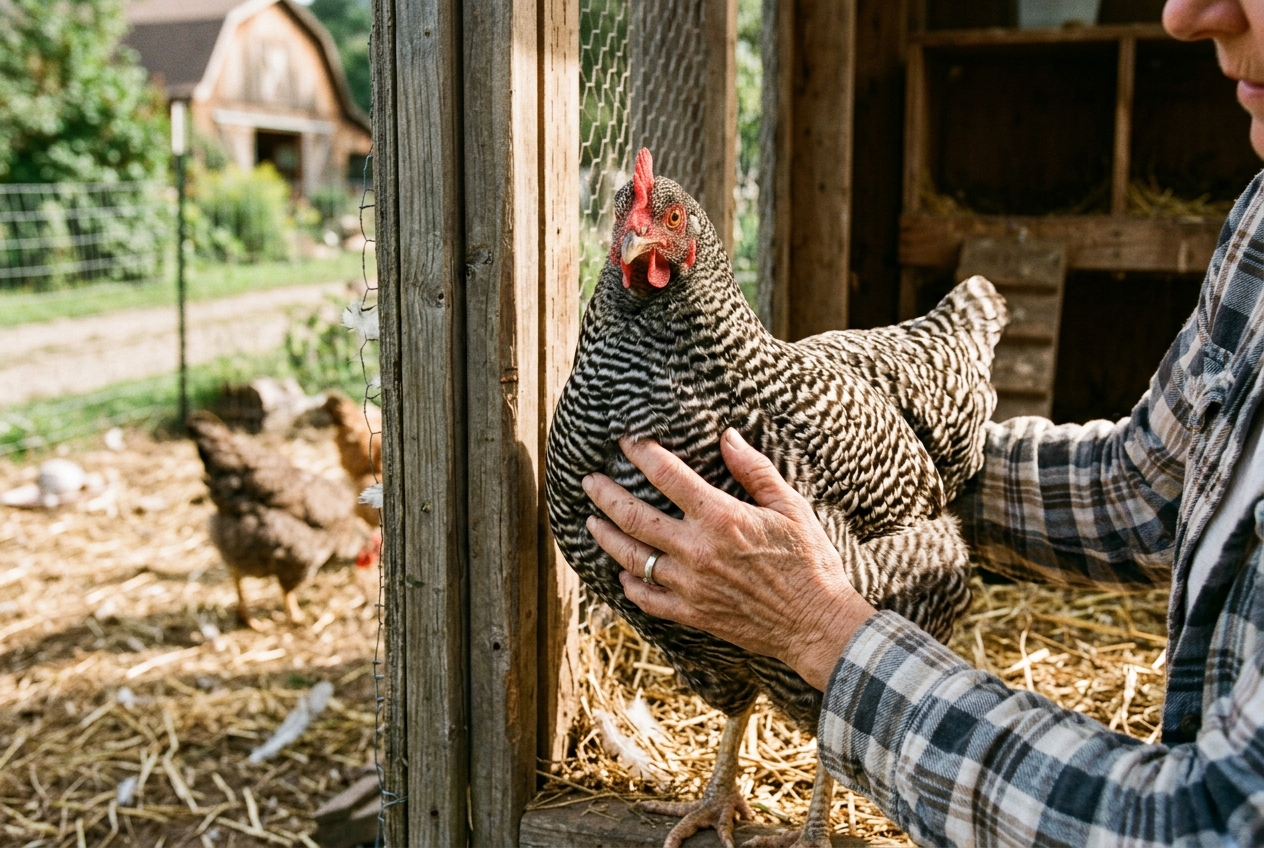
id=”quick-facts-heading”>Quick facts
| Safe Lubricant | Food-grade extra virgin olive oil or coconut oil (0.5 to 1.0 mL warmed to body temperature) |
|---|---|
| Lethal Substance to Avoid | Mineral oil (petroleum hydrocarbons coat lungs without triggering cough, causing fatal pneumonia) |
| Proper Direction of Massage | Small circular motions moving downward and outward toward the proventriculus, never upward |
| Bird Posture During Massage | Keep the chicken standing completely upright or resting comfortably on your lap |
| Companion Protocol | Review the 5-step workflow in our Overnight Crop Emptying Triage Guide |
1. Why mineral oil is fatal to chickens
In older livestock literature, mineral oil was occasionally mentioned as a laxative. In avian medicine, however, board-certified avian veterinarians strictly prohibit administering mineral oil to poultry. Chickens possess a highly sensitive, open glottis at the base of the tongue and completely lack an epiglottis flap to seal their airway during swallowing.
Mineral oil is tasteless, odorless, and possesses low surface tension. When dropped into a chicken’s mouth, the bird cannot sense the oil coating its tongue and fails to trigger a protective swallowing reflex. The oil slides silently into the trachea, coating the delicate alveoli of the lungs and air sacs. This induces acute lipoid aspiration pneumonia, a non-treatable condition that causes slow suffocation within two to five days.
In contrast, small amounts of warm food-grade vegetable oil, such as extra virgin olive oil or melted organic coconut oil, stimulate natural taste receptors and swallowing reflexes, making them significantly safer when administered properly.
2. Required supplies and preparation
Before beginning supportive massage, assemble the following items in a calm, well-lit area:
- Pure Extra Virgin Olive Oil: Warm 1 teaspoon of olive oil in a small cup surrounded by warm water so it reaches approximately 100°F (chicken body temperature is 105°F to 107°F). Never administer cold oil.
- 1 mL Needleless Syringe or Eye Dropper: A precise calibrated syringe prevents sudden accidental boluses of fluid.
- Large Bath Towel: For gently wrapping the hen’s wings to keep her calm and stationary during examination.
- Warm Water with Electrolytes: Hydration is essential to break up dry impactions.
3. Step-by-step olive oil massage technique
Follow these precise steps to safely lubricate and soften an impacted crop:
- Wrap and Secure the Hen: Wrap the hen securely in a towel with her head exposed, tucking her wings close to her body. Sit down and place her upright on your lap facing forward. Keeping the bird upright is essential to prevent fluid backflow.
- Administer Oil with Extreme Caution: Place the tip of the syringe at the front side of the beak. Dispense a tiny droplet (no more than 0.2 mL at a time) onto the side of the lower beak. Allow the hen to flick her tongue and swallow naturally. Never insert the syringe tip down the throat or squirt liquid into the center of the mouth where the tracheal opening sits. Administer a total volume of 0.5 to 1.0 mL maximum.
- Locate the Crop Mass: Place your dominant hand over the right breast pouch. Identify the edges of the hard, fibrous mass beneath the feather layer.
- Perform Circular Kneading: Using the pads of your thumb and forefinger, gently knead the mass using soft, circular motions. Work from the outside edges of the lump inward, slowly teasing apart tangled fibers and compacted grains.
- Work Downward Toward the Gizzard: Always direct pressure downward and slightly toward the center of the chest. Never push upward toward the neck or throat. Massage for three to five minutes, then return the bird to her quiet hospital crate.
4. The danger of expressing the crop upward
Under no circumstances should you attempt to massage food upward out of the crop or force the bird to regurgitate. When a hen’s crop is squeezed upward, stagnant, fermenting fluid floods the oral cavity. Because the bird is panicked and breathing heavily, the airway remains open, and regurgitated fluid is immediately drawn into the respiratory tract.
If you suspect the bird has developed secondary fermentation on top of the physical impaction, review our guide on Impacted Crop vs Sour Crop to adjust your supportive protocol.
5. What to expect and when to stop
Following gentle massage and hydration, allow the hen to rest quietly in a dark, warm space. Re-examine the crop in six to eight hours. If the technique is successful, the dense knot will feel softer, spongier, and noticeably smaller as lubricated particles pass into the gizzard.
Stop supportive massage and contact an avian veterinarian immediately if:
- You feel no change or softening in the mass after two massage sessions over 24 hours.
- The hen begins gurgling, coughing, or showing fluid around the nostrils.
- The hen exhibits signs of shock, pale comb, or lethargy. Check other emergency warning signs using our Pale Comb Urgent Checklist.
- The crop wall feels hot, tight, and distended, indicating that surgical intervention is necessary to physically remove the obstruction.