
Chicken Heat Stress: Symptoms, Cooling Steps & Electrolyte Care
Quick answer
Chickens suffer heat stress when coop temperatures rise above 85 degrees Fahrenheit. Because chickens cannot sweat, they pant rapidly and hold wings away from their bodies to cool off. Cool water foot soaks and electrolytes save overheated hens.
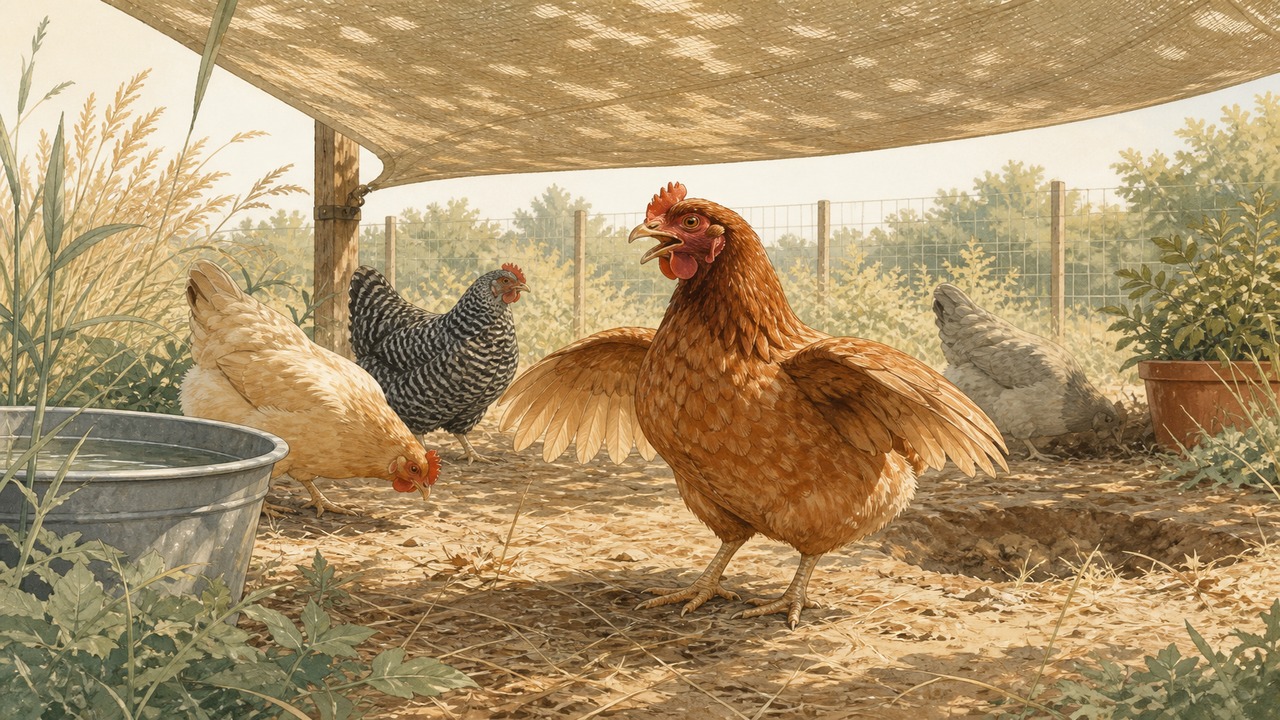
Quick Facts: Heat Stress in Backyard Chickens
| Danger Temperature | Coop temperatures over 85°F (29°C) |
|---|---|
| Severe Risk Zone | Temperatures over 95°F (35°C) with high humidity |
| Cooling Mechanism | Evaporative panting and wing spreading (no sweat glands) |
| Fastest Cooling Step | Shallow cool water foot bath (never ice water) |
| Electrolyte Solution | 1 gallon fresh water + 1 tsp salt + 1 tsp baking soda |
| Egg Shell Impact | Respiratory alkalosis causes thin or soft-shelled eggs |
Heat Stress Severity Ladder: Spotting the Stages
Chickens wear a permanent down feather coat and carry a natural body temperature of 106 degrees Fahrenheit. When outdoor temperatures climb, hens lose the ability to radiate heat. Review this severity guide to catch overheating early:
| Stage | Physical Symptoms | Keeper Action |
|---|---|---|
| Stage 1: Mild Heat Discomfort | Wings held slightly away from body; seeking shade; drinking more water. | Refresh waterers with cold water; open coop cross-ventilation windows. |
| Stage 2: Moderate Heat Stress | Rapid open-beak panting; pale comb and wattles; reduced feed intake. | Add electrolytes to water; provide frozen fruit treats; mist run floor dirt. |
| Stage 3: Severe Heat Exhaustion | Lying flat on ground with wings spread; eyes half-closed; unresponsive. | Stand hen in shallow cool water; move to shaded breeze; offer dropper water. |
| Stage 4: Fatal Heat Stroke | Tremors, convulsions, comb turning deep purple, collapse. | Emergency veterinary intervention; cool whole body gradually; fan gently. |
Why Rapid Panting Causes Respiratory Alkalosis
Chickens possess zero sweat glands. To release heat, a hen pumps air rapidly over moist membranes in her mouth and respiratory tract. While panting provides evaporative cooling, it creates a dangerous chemical side effect.
Rapid breathing expels immense volumes of carbon dioxide from the lungs. This sudden loss of carbonic acid shifts blood pH upward into respiratory alkalosis. Blood calcium binds tightly to proteins, preventing calcium carbonate from reaching the oviduct shell gland. This chemical shift explains why hens lay soft, rubbery, or paper-thin eggs during summer heatwaves.
Cooling Overheated Hens Safely: What to Do and Avoid
When a hen pants heavily and refuses to walk, act quickly to reduce her core body heat. The fastest and safest technique is a shallow cool-water foot bath. Avian legs and feet have a rich network of surface blood vessels that radiate heat rapidly.
Fill a shallow rubber pan with 2 inches of cool tap water (roughly 70 to 75 degrees Fahrenheit). Gently place the hen’s feet in the water and let her stand in the shade for 10 to 15 minutes. NEVER dunk an overheated chicken into ice-cold water. Freezing water shocks the heart and causes surface blood vessels to constrict, trapping scorching heat inside vital organs.
Summer Electrolyte Recipes and Coop Setup Steps
During extended heatwaves, plain water is not enough because panting flushes potassium and sodium from blood plasma. Offer electrolytes in a separate waterer for 3 to 4 days, while keeping plain water available at all times.
To make a homemade poultry electrolyte solution, mix 1 gallon of fresh water with 1 teaspoon of plain salt, 1 teaspoon of baking soda, and 1 tablespoon of molasses or sugar. Ensure your flock has generous shade cloth over the run, and check your coop ventilation with our chicken coop size calculator. Maintain high-protein layer feed vs grower feed in cool morning hours.
The Bottom Line on Chicken Heat Stress
Heat kills chickens faster than cold winter weather. Provide deep shade, clean cold drinking water with electrolytes, and shallow foot baths during extreme heatwaves to protect your laying flock from heat stroke.
Frequently Asked Questions
What temperature is too hot for chickens?
Temperatures above 85 degrees Fahrenheit trigger mild heat stress. Temperatures above 95 degrees Fahrenheit with high humidity are dangerous and require active cooling steps.
Should I spray chickens directly with a garden hose?
Avoid soaking adult feathers with a heavy hose spray. Wet down feathers trap humidity against skin like a wet blanket, making it harder for the hen to cool off.
Can I put ice cubes in chicken waterers?
Yes, floating ice cubes or frozen water bottles in waterers is an excellent way to keep drinking water refreshingly cool throughout hot summer afternoons.
Why do chickens lay fewer eggs in the summer?
Hens eat significantly less feed during hot weather to reduce metabolic heat production. Lower calorie and protein intake causes egg laying to slow down or stop.
Evidence & Research Citations
- University of California Davis Poultry Extension: Preventing and Managing Heat Stress in Backyard Poultry
- University of Georgia Cooperative Extension: Heat Stress Management in Layer Flocks
- Auburn University Extension: Electrolytes and Cooling Techniques for Summer Backyard Flocks